
Annotations Issue 39: Grid, Locked: Why Energy Costs Are on the Rise
Requiring households to bear the costs of an AI-generated hike in utility bills is neither fair nor tenable.

Dear readers,
Coming off a week of U.S. elections centered on affordability, now is an important time to elevate ideas that reframe policy around consumers rather than corporations. In our most recent edition of Annotations, Jared Jageler (MPA ‘27) writes that years of underinvestment in energy infrastructure have led us to an age of skyrocketing energy prices. He shares policy solutions, including holding data centers responsible for the costs they’re generating, planning new transmission corridors with capacity to meet modern demand, and streamlining policy pathways for infrastructure to be easily upgraded.
We want to hear your thoughts too! Send us your questions, ideas, pitches, comments, or thoughts. Write to us at jpia@princeton.edu or check out our submission guidelines.
Mera, Michelle, and Shreya
JPIA Digital Editors
Grid, Locked: Why Energy Costs Are on the Rise
by Jared Jageler for Annotations Blog
In a race where campaigns waged war over their affordability plans, energy costs emerged as a central issue for Mikie Sherrill, the recent governor-elect of New Jersey. Electricity bills have risen faster here than in any other state but one. Power-hungry data centers that feed AI models are cropping up everywhere, and many blame them for jacking up costs. Meanwhile, renewables are a right-wing boogeyman, with solar and wind projects under assault from a hostile Trump administration. Energy costs are increasing, or projected to increase, across most of the US. However, the underlying causes do not neatly map onto a political platform. When policymakers come to the table, they should look to a suite of commonsense solutions that will stop another ruthless bout of energy-cost inflation from crushing American wallets.
How the power grid creates energy prices
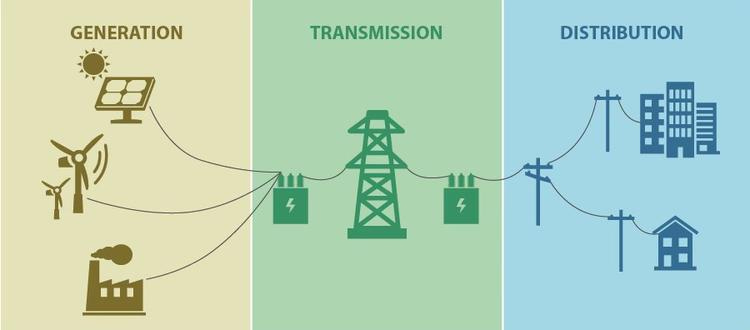
To understand why utility bills go up, it is helpful to have a mental model of how costs feed through the US power grid to consumers. The grid is a complex network of energy sources and electrical lines that delivers power to users across the country. At its most simple, power is generated on the supply side, delivered to the consumer on the demand side, with transmission distributing power from the supply to demand sides. Each of the three stages has unique costs that are passed to consumers through energy bills.
Power generation
The generation side of the grid comprises power sources, including power plants (fossil fuels, nuclear, or renewables) and distributed generation systems (like solar panels and wind turbines). As is aligned with principles of supply and demand, more power sources mean cheaper electricity prices. Likewise, shocks to supply, like rising fuel prices or when renewable energy projects are canceled, increase energy costs.
Recently, the GOP repealed many Inflation Reduction Act subsidies for renewable energy generation. Right now, the Trump administration is canceling federal leases for large solar and wind projects. Even though some sources only generate electricity at certain times, removing any supply from the grid increases prices. Fuel prices are also volatile, and Trump lifting a ban on exporting domestically fracked liquid natural gas is expected to increase US heating costs because of higher overall demand.
Power consumption
Historically, consumer power demand has been stable and predictable, only spiking during major weather events. However, the grid has faced more volatile consumption in recent years. Climate change has made extreme weather events more common and severe, spiking demand during heat waves and cold snaps. The clean energy transition is also electrifying daily-use machines that used to run primarily on liquid fuel, like cars and household appliances, further increasing the demand for electricity.
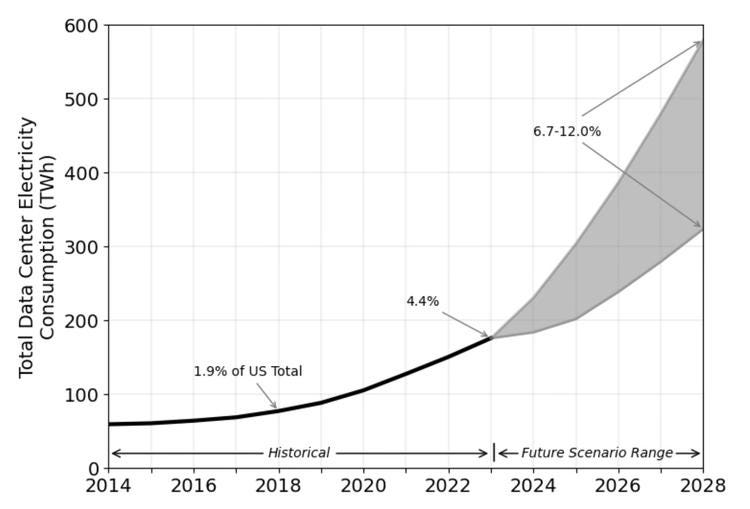
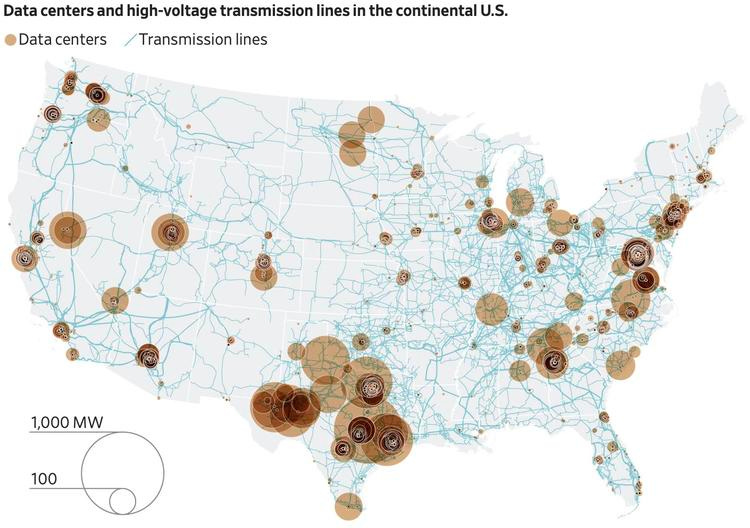
Data centers in particular draw significant scrutiny for their massive and volatile electricity demands driven by AI models. Communities near new facilities often report higher utility bills. While macro-level studies struggle to isolate the specific impact of data centers on energy costs due to local variations in the local grid and the type of center, it is clear that the exponential growth in data center load will pose a grave threat to the already-fragile grid. However, focusing only on data centers oversimplifies the issue of rising energy costs. The deeper problem lies in decades of underinvestment in transmission infrastructure, which has left the grid ill-equipped to handle surging demand from AI, electrification, and climate-related stress, and consumers holding the bag for its repair.
Power delivery is bottlenecked
Transmission is the vast network of power lines, towers, and transformers that form the circulatory system of the grid. Energy use often surges far away from where it is produced, so transmission can carry bulk electricity upwards of hundreds of miles to consumers. Since renewables produce power intermittently, transmission and battery storage are crucial for matching supply and demand. Even if there were enough renewable energy to meet all electricity use in the US, without enough transmission capacity, prices would still rise, and oil and gas would still burn.
Infrastructure
The United States has a transmission capital stock that is aging out, insufficient to meet our rising demand. Over 70 percent of U.S. transmission infrastructure is past the midpoint of its 50-year life expectancy. Annual U.S. expenditures on transmission have hit record highs, but 90 percent of that spending goes to replacing aging equipment, while construction of new high-voltage transmission has slowed to a “trickle.” There are few onshore supply chains for the components of this infrastructure, so recent tariffs are driving up their replacement costs. Extreme weather and climate change also increase infrastructure costs. The nationwide net effect of these shocks is that rising fixed costs of transmission capital have outweighed the increases in variable costs of electricity generation.
Just like with electricity generation, the costs of transmission capital are paid for by utility companies, who pass their costs on to consumers’ energy bills. Requiring households to bear the costs of an AI-generated hike in utility bills is neither fair nor tenable. We need a resilient grid that can handle the power surges that will be exacerbated by climate change and electrification.
Interconnection Queues
The final, most frustrating bottleneck in transmission is extremely long wait times. Before starting construction, energy developers must apply to connect facilities to the grid through a process called interconnection. However, the aging transmission system can only handle so much electricity, and upgrades to the system are glacially slow. This has created huge bottlenecks: power demand grows, new generation aims to meet that demand, yet the interconnection queue grows longer as projects wait for available transmission.
The scope of the problem is jarring. Longer queues led to an increase of three years on average in the time between requesting interconnection to commercial operation. PJM (the grid operator for New Jersey and nearby states) is the worst offender, with the most projects in the queue of any grid nationwide, and energy bills spiking as a result.
Policy Fixes to Keep Costs Down
At an NYC Climate Week event I attended on energy costs, one of the panelists said, “Once they’re up, we can’t get electricity prices back down. Period.” This makes it all the more urgent for policymakers to pursue fixes to our energy system to prevent further power cost inflation:
Put data centers on the hook for energy costs and zero-carbon upgrades
AI and data centers are here to stay, and policy should adapt. Local policymakers should extract further financing from tech companies for long-deferred upgrades to the grid that will build resilience and help clear the interconnection queues. At a minimum, new data centers driving load growth should absorb costs currently being passed to consumers, as Texas recently required.
A well-designed policy can mitigate the costs of data center usage while also accelerating decarbonization. Some firms already bypass transmission and interconnection by building new generation on-site, but many current projects are natural gas plants, rather than renewables. In response, additionality requirements could compel companies to secure new power from a zero-emissions generation source with battery storage.
Smarter transmission planning
The United States needs well-planned transmission corridors connecting big renewable energy projects to areas facing growing power demand. New transmission must be high voltage capacity, which saves money in the long run and will help clear queues. There are also a handful of off-the-shelf Grid Enhancing Technologies that utilities can invest in as a stopgap to make existing power lines more efficient.
Permitting Reform
In addition to interconnection queues, energy projects also typically face long wait times or legal fights to clear permitting at the local, state, and federal levels. For big interstate transmission projects, legal hurdles can be nearly insurmountable. Reform is desperately needed to help overcome these roadblocks. Michigan, for instance, removed absolute veto power from localities in permitting large renewable energy, storage, and transmission projects. Federally, cutting the red tape of environmental laws like NEPA is a popular proposal. But the government could also speed up construction of new power lines by creating simpler federal approval pathways and easier access to public financing.
Wielding rising energy bills as a political weapon
Modernizing the grid keeps costs down long term, but upgrades are costly. They are also visibly itemized in consumers’ power bills. Recognizing the tradeoffs, politicians should follow Sherrill’s lead by framing the imperative of preventing further price hikes. They should rightly hold utilities and tech companies publicly responsible for squeezing customers, and use that leverage to extract concessions that help push through grid fixes.
Conclusion
The circumstances for clean energy industrial policy are grim on all fronts right now. But despite the challenges, we should not sell out solar panels with battery storage for a new gas plant down the road. Decarbonizing our energy supply will require voters and policymakers to fight for green investments and smart regulation on the supply, demand, and transmission fronts of the energy system.

Meet the author: Jared Jageler
Jared is a Master in Public Affairs student at Princeton University’s School of Public and International Affairs, concentrating on science, technology, and environmental policy. He studied Economics at Macalester College in Saint Paul, Minnesota, where his honors thesis received publication for its novel findings of the Clean Air Act reducing race-based disparities in PM2.5 exposure.
Before arriving at Princeton, Jared was an Assistant Analyst at the Congressional Budget Office (CBO) in the Microeconomic Studies Division. His published work includes modeling effects of policies related to climate change adaptation, natural disasters, permitting reform, and R&D and innovation. Upon graduating, he hopes to work on state and federal budgets to promote thriving communities, environments, and economies.
Absolutely right. Tech should bear the marginal costs of meeting its exorbitant demands, not impose them on existing users, who are struggling to reduce their demand through renewables.